
Passive job seekers are the single largest source of high-value talent data in the modern hiring market. As of early 2026, 70–73% of the global workforce is classified as passive, meaning they are not actively applying but remain open to the right opportunity. That majority status makes their behavioral and occupational data the most representative signal of real workforce conditions. Understanding why passive job seekers generate data value is not just a recruiter concern. It is a career strategy every professional needs to grasp right now.
Why passive job seekers generate data value
Passive candidates generate data value because their professional profiles reflect real, current behavior rather than a job hunt in progress. An active job seeker updates a resume under pressure. A passive professional updates skills, earns certifications, and shifts roles because their career is actually moving. That difference in motivation produces richer, more honest data.
Occupational profile data for passive candidates includes role progression, skill endorsements, certifications, tenure history, and location changes. Each of these data points tells a story about readiness and fit that a keyword-stuffed resume cannot. When combined, they build predictive hiring models that identify who is likely to move before that person even starts looking.

The industry term for this practice is passive candidate sourcing, and it sits at the center of data-driven recruitment strategies in 2026. Recruiters now read subtle change signals, such as a new certification added, a title update, or a geographic shift, as early indicators of openness. These signals arrive months before a formal application ever does.
Pro Tip: Treat your professional profile as a living document. Every skill you add and every role update you make generates a data signal that recruiters are actively reading, even when you are not searching.
Here is what a complete passive candidate data profile typically includes:
- Role progression: Title changes and promotions that show upward trajectory
- Skill endorsements: Third-party validation of specific competencies
- Certifications: Dated credentials that signal recent learning activity
- Tenure patterns: Time spent at each employer, revealing stability or restlessness
- Location signals: Geographic shifts that indicate willingness to relocate or remote preference
- Engagement patterns: Content shared, groups joined, and professional communities followed
Each of these data points combines with others to give recruiters a multidimensional view of a candidate. That view is far more predictive than a static resume submitted in response to a job posting.
How do passive candidates improve recruitment efficiency?
The efficiency gains from passive candidate data are measurable and significant. Companies using data-driven hiring with passive profiles reduce time-to-hire by 40% and cut cost-per-hire by up to 50%. Those numbers reflect what happens when AI matching technologies analyze behavioral and occupational signals instead of waiting for applications to arrive.
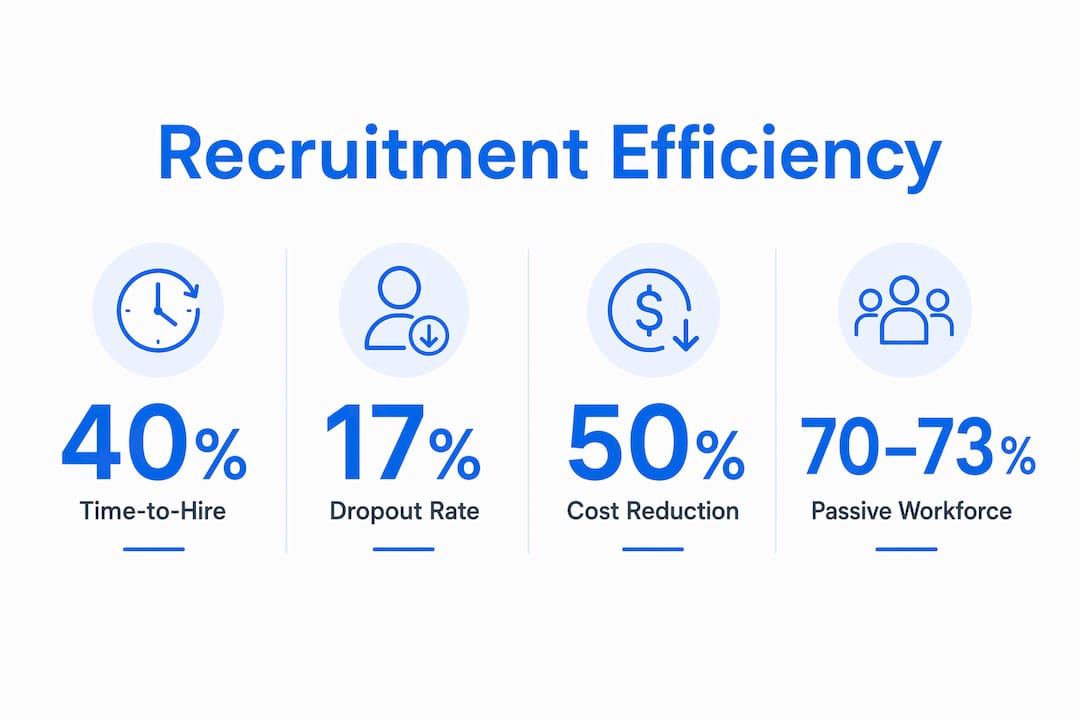
Passive candidates also stay in the process longer. They are 17% less likely to drop out of recruitment funnels than active seekers. That lower dropout rate means the data investment in sourcing them pays off at a higher conversion rate. Recruiters spend less time re-sourcing and more time closing.
Personalized outreach built from profile data signals drives this conversion. When a recruiter references a specific certification or recent project in an initial message, the passive candidate feels seen rather than spammed. That precision comes directly from reading occupational data correctly. It is the difference between a cold pitch and a warm conversation.
| Metric | Active candidates | Passive candidates |
|---|---|---|
| Time-to-hire reduction | Baseline | Up to 40% faster |
| Cost-per-hire savings | Baseline | Up to 50% lower |
| Funnel dropout rate | Higher | 17% lower |
| Data richness | Resume-based | Multi-dimensional profile |
The table above shows why data-driven recruitment strategies built around passive profiles outperform traditional application-based hiring on every measurable dimension.
What makes passive candidates' data different from active seekers?
Passive and active job seekers do not just behave differently. They evaluate opportunities through entirely different lenses, and that difference shapes the data they generate.
Nearly 90% of passive candidates actively survey employer reputation before considering a move. They check review platforms, read leadership commentary, and assess cultural signals long before any recruiter contacts them. That behavior generates a trail of brand interaction data that active seekers, who are often applying out of urgency, rarely produce.
Passive seekers also prioritize job security and long-term stability over excitement or novelty. Their decision process is slower, more deliberate, and more stringent. This means the data they generate reflects genuine preference rather than desperation. Recruiters who understand this distinction adapt their messaging accordingly, leading with stability and growth rather than perks and speed.
There is also a self-perception gap worth noting. Passive candidates rate their own performance higher than active seekers do, yet they rate their current employers lower. That combination signals a professional who believes they have outgrown their current role. It is one of the most reliable indicators of near-term openness.
Pro Tip: If you are a professional in a stable role, your profile data already signals your market value. You do not need to be searching to be seen. Keeping your profile current is enough to attract the right attention.
Here is how passive and active candidate motivations differ at the decision point:
- Passive candidates weigh employer brand, cultural fit, and long-term trajectory before responding
- Active candidates weigh speed, compensation, and availability as primary filters
- Passive candidates require multiple touchpoints and personalized context to convert
- Active candidates often accept the first reasonable offer that clears their minimum threshold
Recruiters who treat passive candidates like active ones lose them immediately. The data these two groups generate requires different interpretation frameworks and different outreach strategies.
How can you create passive value from your job searching?
You do not need to be actively job hunting to build career momentum. Creating passive value from your job searching activity means maintaining visibility and generating signals that attract opportunities before you need them. This is timing arbitrage in practice.
Timing arbitrage means building recruiter relationships and professional visibility before a job need arises. Professionals who do this receive faster offers and more mentoring opportunities than those who only appear in the market during a crisis. The logic is simple: recruiters trust people they already know.
Here is a four-step approach to building passive career value right now:
- Update your occupational record monthly. Add new skills, certifications, and project outcomes as they happen. Do not wait for a job search to trigger a profile refresh. Recruiters read these updates as live signals of growth.
- Share industry-specific insights publicly. A single post that reaches your professional network can reach 500 to 5,000 contacts, compared to a cold application that has a 0.1–2% success rate. Content creates a passive referral engine that works while you sleep.
- Apply the EVC method to your content. EVC stands for Entertaining, Valuable, and Credible. Every piece of content you share should meet at least two of these three criteria. Content that hits all three builds the kind of professional brand that generates warm recruiter pipelines without any active outreach.
- Engage with recruiters before you need them. Comment on their posts, share their content, and respond to their outreach even when you are not looking. That relationship becomes your fastest path to an offer when the time comes.
Pro Tip: The professionals who get the best offers are rarely the ones who searched the hardest. They are the ones who stayed visible long enough that recruiters came to them. Start building that visibility now, not when you need a job.
The types of job seeker data you generate through these activities, profile updates, content engagement, and network interactions, are exactly what recruiters use to build passive candidate pipelines. You are contributing to that pipeline whether you realize it or not. The question is whether you are doing it intentionally.
Key Takeaways
Passive job seekers generate the most predictive and cost-effective hiring data available, making intentional profile management the highest-return career activity a professional can practice.
| Point | Details |
|---|---|
| Passive candidates dominate the workforce | 70–73% of global workers are passive, making their data the most representative talent signal available. |
| Profile data outperforms resumes | Occupational profiles combining tenure, skills, and certifications predict candidate fit more accurately than static resumes. |
| Efficiency gains are measurable | Data-driven passive sourcing cuts time-to-hire by 40% and cost-per-hire by up to 50%. |
| Passive and active data require different reads | Passive candidates prioritize stability and brand reputation, generating more deliberate and brand-sensitive behavioral data. |
| Visibility creates passive career value | Sharing industry content and maintaining an updated profile generates recruiter attention without active job searching. |
The long game most professionals are not playing
I have watched professionals spend months grinding through applications, refreshing job boards, and sending cold messages into the void. The frustrating part is that most of them already had everything they needed to attract the right opportunity. They just were not making it visible.
The shift I keep seeing in data-driven recruitment is this: gut feel is losing ground fast. Recruiters who used to rely on instinct are now reading occupational signals, engagement patterns, and profile change histories to identify candidates before those candidates even know they are being considered. That is not a future trend. It is the current reality in 2026.
What strikes me most is that passive candidates function as career insurance. The professional who maintains a visible, updated profile and engages with their industry community is never truly at risk. When a layoff hits or a role disappears, they already have warm relationships and a recruiter-readable record of their value. The professional who only updates their profile during a crisis is starting from zero every time.
The data you generate passively, your certifications, your content, your network interactions, is not just useful to recruiters. It is your professional identity in a market that increasingly reads signals over statements. Treat it accordingly.
— Eric
How Earnhire turns your search activity into career capital
Every search you run, every job you save, and every resume you tailor on Earnhire builds a data record that tells employers what you bring to the table.
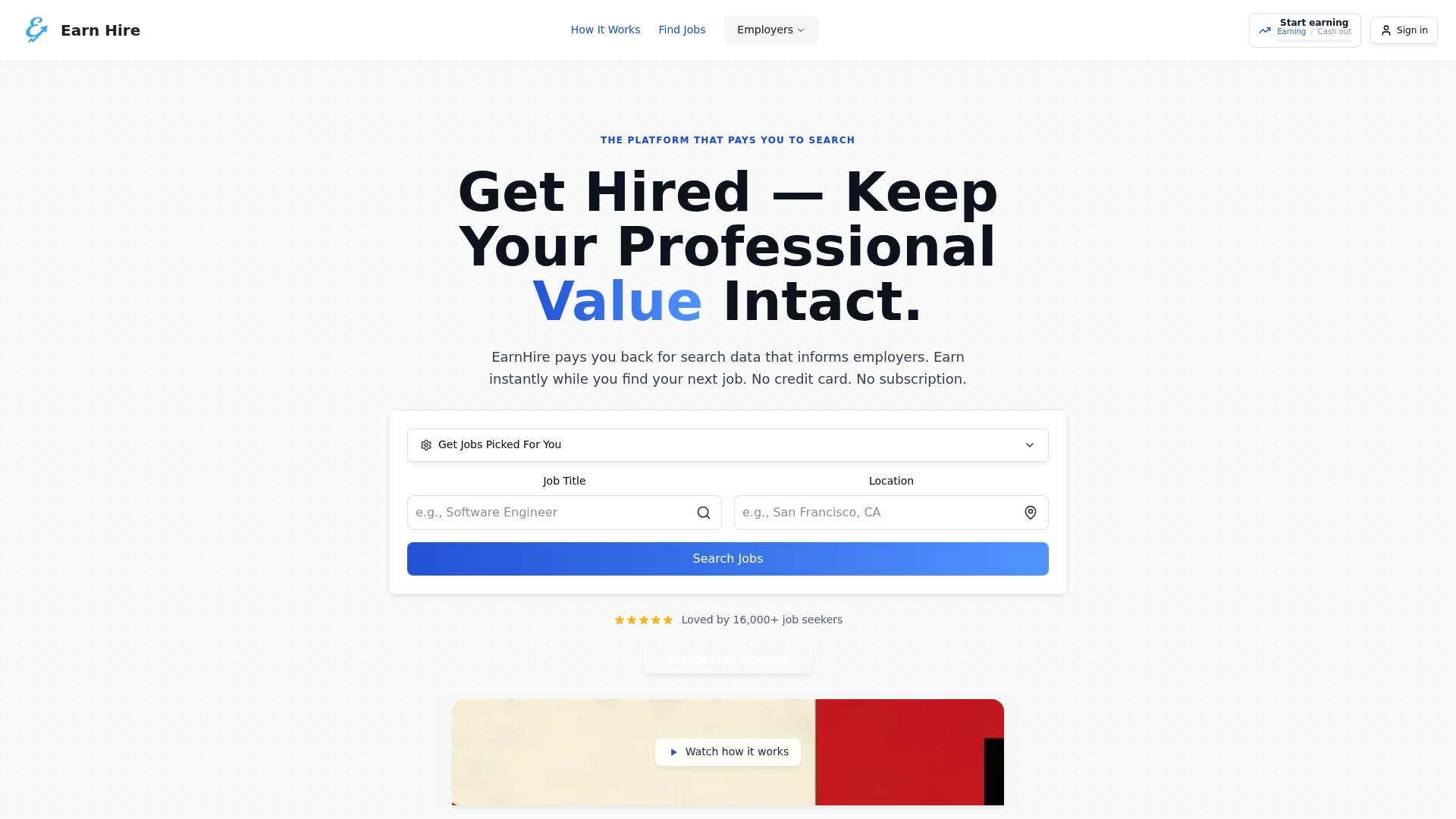
Earnhire is built for professionals who understand that the work of searching has real value. The platform's guided job search process captures your occupational signals and turns them into insights employers can act on. With AI-powered resume tailoring tools and job analysis features, Earnhire helps you present your professional profile as the living, data-rich record it actually is. You preserve your career identity between roles, and you get compensated for the effort of searching. That is the difference between a job board and a platform that works for you. Start building your data worth with Earnhire today.
FAQ
What percentage of the workforce are passive job seekers?
As of early 2026, 70–73% of the global workforce is classified as passive, with 85–87% of professionals open to new roles. This makes passive candidates the dominant talent pool in any hiring market.
Why do passive candidates produce better hiring outcomes than active ones?
Passive candidates are 17% less likely to drop out of recruitment funnels and generate richer occupational profile data that enables more accurate matching. Their profiles reflect real career movement rather than a job hunt, which makes the data more predictive.
How does passive candidate data reduce hiring costs?
Companies using AI-driven matching on passive profiles cut cost-per-hire by up to 50% compared to traditional active-applicant hiring. The efficiency gain comes from targeting candidates with high fit probability before they enter a competitive application pool.
What signals indicate a passive candidate is open to a move?
Key signals include new certifications added to a profile, title updates, geographic shifts, and increased engagement with industry content. Recruiters trained in data-driven recruitment read these as early indicators of openness, often months before a formal search begins.
How can professionals build passive career value without actively searching?
Maintaining an updated occupational profile, sharing industry insights publicly, and engaging with recruiters before a job need arises are the three most effective methods. A single post can reach thousands of professional contacts, compared to the 0.1–2% success rate of cold applications.