
Career optimization through data is defined as the practice of applying career intelligence, predictive analytics, and AI tools to make professional decisions that consistently outperform intuition-based approaches. The industry term for this discipline is career intelligence, and it covers everything from skills gap analysis to real-time labor market tracking. Traditional career planning relies on gut feel, outdated advice, and reactive job searching. Data-driven career advancement replaces that with signals: compensation benchmarks, skill demand shifts, and market timing indicators that tell you where to move and when. If you want to stop guessing and start making moves that actually stick, this is the framework you need.
What is career optimization through data?
Career optimization through data is the systematic use of quantitative and prescriptive frameworks to guide professional decisions, replacing traditional intuitive counseling with evidence-based planning. The result is higher satisfaction and lower regret from career moves. Think of it as running market research on yourself.
Career intelligence means knowing your skill demand, compensation benchmarks, competitive positioning, and optimal market timing. It converts career decisions from gut instinct into informed strategy. You stop reacting to job postings and start positioning yourself ahead of demand.

The practical difference shows up fast. Professionals using data-driven career advancement identify skill gaps before they become liabilities, time their job searches to match hiring cycles, and negotiate salaries with actual market data behind them. That is a fundamentally different posture than refreshing a job board and hoping for the best.
What are the core data sources for career optimization?
Effective career intelligence draws from two streams: individual-level data and labor market data. Both matter. Neither works well without the other.
Individual-level data includes:
- Skills inventory (technical and interpersonal)
- Personality and work-style assessments, including validated tools like the MBTI
- Education, certifications, and qualifications
- Career history and performance patterns
- Stated interests and long-term professional goals
Labor market data includes:
- Real-time job posting trends and role demand
- Compensation benchmarks by role, industry, and geography
- Skill shift signals showing which competencies are gaining or losing value
- Competitive positioning data showing how your profile compares to active candidates
Integrating these data streams with real-time labor market systems is what separates genuine career optimization from a one-time resume refresh. Static snapshots go stale fast. The professionals who stay ahead treat their career data as a living asset, not a document they update every few years.
Pro Tip: Check when your career platform last updated its labor market data. Platforms running on daily data pipelines give you a meaningful edge over those refreshing weekly or monthly.
How do AI and machine learning power career optimization tools?
AI brings three distinct techniques to career optimization, and each one does something the others cannot.
-
Natural language processing (NLP) reads your resume and profile the way a recruiter does, but faster and at scale. NLP analyzes context in resumes, scores them on a 0–100 scale, and maps your experience to roles based on education and skills. It also powers personality profiling using decision tree classifiers, so the system understands not just what you have done but what kind of work fits you.
-
Machine learning (ML) predicts job trends and identifies skills gaps before they become obvious. ML models forecast which roles are growing, which skills are becoming table stakes, and where compensation is moving. This is the engine behind personalized learning paths that tell you exactly what to build next.
-
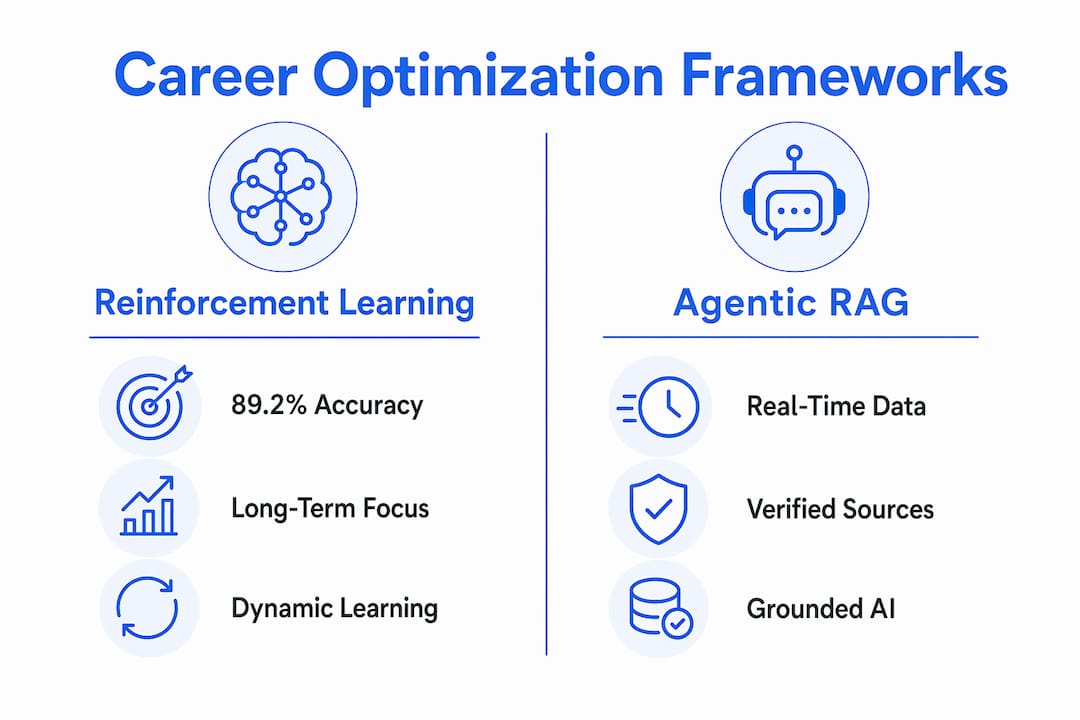
Reinforcement learning (RL) simulates sequences of career decisions to find the path with the best long-term outcome. A reinforcement learning framework achieved 89.2% accuracy in career recommendations, outperforming static methods by 17.1%, with 23.7% better long-term outcome prediction. RL models also increased average income by 5% in studies simulating career decisions. That is not a marginal improvement. It is a structural advantage.
Together, these techniques power features like interview coaching, salary benchmarking, and personalized role recommendations. The key insight is that AI does not replace your judgment. It gives your judgment better raw material to work with.
Pro Tip: When evaluating an AI career tool, ask whether it uses reinforcement learning or only static matching. Static tools show you what exists today. RL tools show you where to go next.
What advanced frameworks are improving career path prediction?
Two frameworks are setting the current standard for accuracy in career path prediction: Agentic Retrieval-Augmented Generation (RAG) and reinforcement learning models.
Agentic RAG systems work by grounding AI recommendations in verified, real-time data rather than relying on a model's internal knowledge. RAG career systems deliver personalized career roadmaps in under 30 seconds with 88% accuracy in time-to-competency predictions, reducing AI hallucinations to 0.2%. They also cut response time by 40% compared to baseline systems and increased 7-day user return rates by 68%. That return rate signal matters. It means professionals are getting recommendations worth coming back to act on.
The table below compares the two leading framework types on key performance dimensions.
| Framework | Recommendation accuracy | Key advantage |
|---|---|---|
| Reinforcement learning | 89.2% | Long-term career path simulation |
| Agentic RAG | 88%+ time-to-competency | Real-time grounding, low hallucination rate |
Both frameworks outperform traditional static career guidance by a wide margin. Static models give you a snapshot. These systems give you a continuously updated map. The practical implication for you is simple: prioritize platforms that use real-time data grounding and state clearly when their market data was last updated.
You can go deeper on how these systems translate into actual job search decisions in this guide on using job data to predict career moves.
How can professionals implement data-driven career optimization?
Knowing the theory is one thing. Putting it to work is another. Here is how to actually do it.
Start with a skills audit. Map what you know against what the market currently values. Use a platform that pulls live job posting data, not a static skills database. The gap between those two lists is your development priority.
Monitor compensation benchmarks continuously. Continuous market monitoring outperforms reactive job searching. Salary data shifts faster than most professionals realize. Checking benchmarks once a year means you are always negotiating from behind.
Use AI-powered resume analysis. Automated platforms run daily data pipelines collecting job market signals, extracting skill requirements, and generating personalized learning roadmaps. Feed your resume into one and treat the output as a gap analysis, not a judgment.
Combine automated tracking with your own judgment. Data tells you what the market rewards. It does not tell you what you actually want. The best career decisions blend market signals with your personal values, risk tolerance, and long-term goals. Automation paired with judgment is the optimal approach.
Verify data freshness before acting. Stale data leads to stale decisions. Before making a major move based on a platform's recommendations, check when its underlying market data was last refreshed. A platform running on six-month-old job posting data is not giving you career intelligence. It is giving you career history.
Pro Tip: Do not ignore soft skills in your data audit. Most AI platforms score technical competencies well but underweight communication, leadership, and adaptability. Add those to your self-assessment manually and weight them against the roles you are targeting.
Earnhire's search behavior insights show how every job search action can generate career data worth tracking.
What are the limitations and ethical risks of career data tools?
AI-driven career tools carry real risks, and ignoring them is how professionals end up making worse decisions with better-looking data.
Bias in AI models is the most significant risk. If a model was trained on historical hiring data, it can encode and amplify existing patterns of discrimination by industry, geography, or demographic group. Human oversight is not optional. It is a necessary check on every AI recommendation.
Data privacy is the second concern. Career optimization platforms collect sensitive personal data: skills, personality profiles, salary expectations, and job search behavior. You should know exactly what data a platform stores, how long it keeps it, and whether it shares it with third parties.
"Even advanced AI tools must manage hallucination risk. Frameworks using real-time market data grounding reduce this risk substantially compared to static models. Users should prioritize tools clearly stating data freshness and grounding methods." — Agentic RAG research
The future of career optimization points toward continuous real-time skill tracking, where your career profile updates as the market shifts rather than when you remember to update it. That is a powerful capability. It also means the quality of your career decisions will increasingly depend on the quality of the platforms you trust. Choose carefully.
Key Takeaways
Career optimization through data works because it replaces reactive, intuition-based decisions with continuous, evidence-grounded career intelligence that adapts as the market shifts.
| Point | Details |
|---|---|
| Define your data sources | Combine individual skills data with real-time labor market signals for accurate career positioning. |
| AI techniques work together | NLP, machine learning, and reinforcement learning each solve a different part of the career optimization problem. |
| Advanced frameworks raise accuracy | RAG and RL systems achieve 88–89% accuracy, far outperforming static career guidance tools. |
| Data freshness determines quality | Always verify when a platform last updated its market data before acting on its recommendations. |
| Blend data with personal judgment | Market signals tell you what is rewarded; your values and goals determine what is right for you. |
What I have learned from watching professionals use career data
I have watched a lot of professionals discover career intelligence for the first time, and the reaction is almost always the same. They feel a mix of relief and frustration. Relief because the data finally confirms what they suspected about their market value. Frustration because they realize how long they made decisions without it.
The shift from intuition to data does not mean you stop trusting yourself. It means you give yourself better inputs. I have seen professionals use data-driven job searching to negotiate salaries they would have previously talked themselves out of asking for, simply because they had the benchmark in front of them.
The professionals who get the most out of career intelligence are not the ones who follow every AI recommendation blindly. They are the ones who use the data to challenge their assumptions and then make a call. That combination of analytical rigor and personal clarity is what actually moves careers forward. The data is the starting point, not the destination.
— Eric
How Earnhire turns your job search into career intelligence
Earnhire is built on a premise most job boards ignore: your search activity has real value, and you should benefit from it.
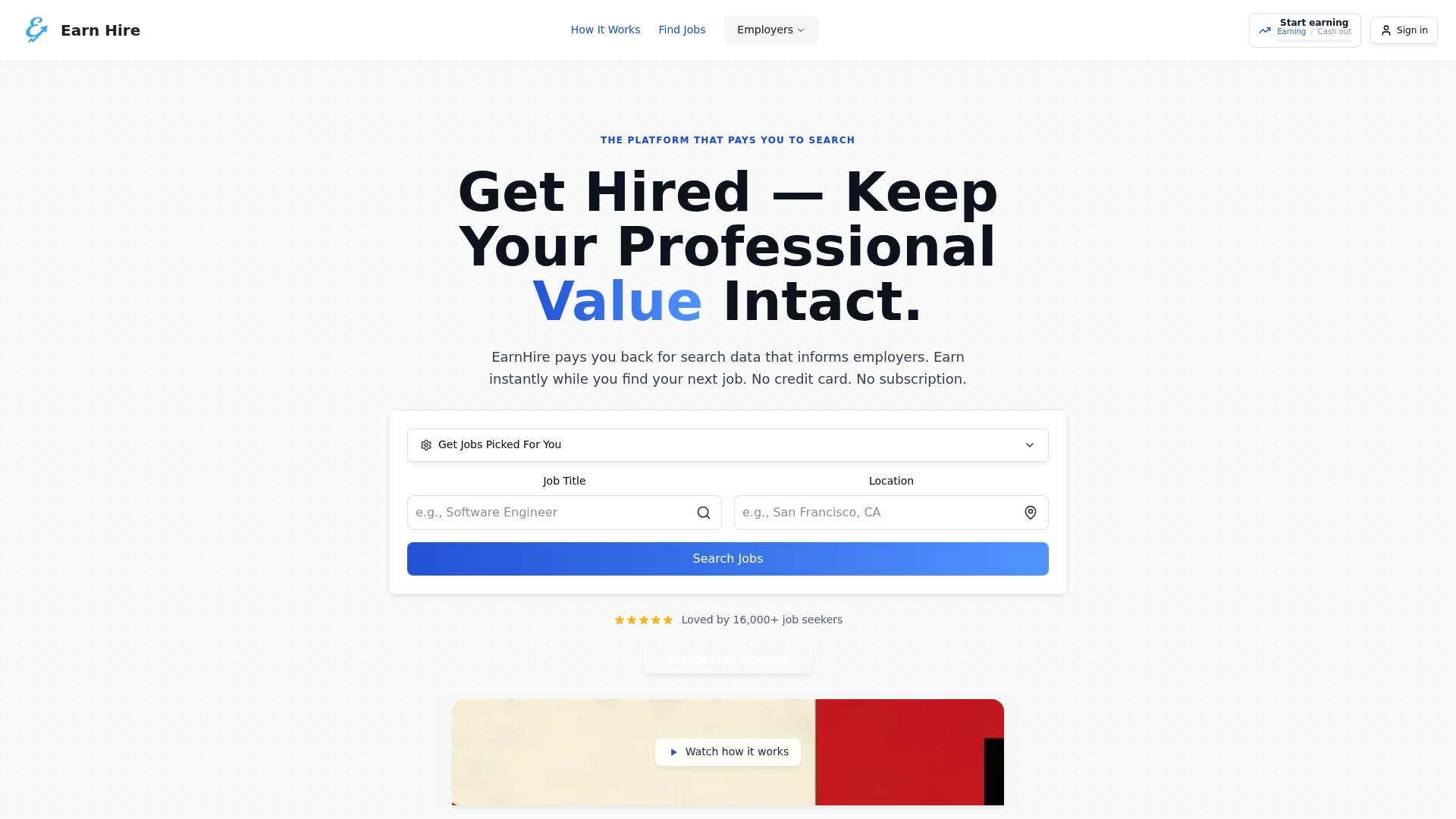
Every resume you tailor, every role you save, and every application you submit on Earnhire builds your data worth, the career signal employers use to make informed hiring decisions. Earnhire's AI resume tools score your resume, identify gaps against live job postings, and generate targeted recommendations so you are always presenting your strongest profile. The guided job search feature pairs that analysis with a structured workflow, so your search produces career insights, not just applications. Your effort compounds instead of disappearing into a void.
FAQ
What is career optimization through data?
Career optimization through data is the practice of using career intelligence, predictive analytics, and AI tools to make professional decisions based on evidence rather than intuition. It covers skills gap analysis, compensation benchmarking, and real-time labor market tracking.
How accurate are AI career path recommendations?
Reinforcement learning frameworks achieve 89.2% accuracy in career recommendations, outperforming static methods by 17.1%. Agentic RAG systems reach 88% accuracy in time-to-competency predictions.
What data do I need to start optimizing my career?
You need two types of data: individual data (skills, personality, qualifications, and career history) and labor market data (role demand, compensation benchmarks, and skill shift signals). Both are required for accurate career planning.
How do I avoid bad recommendations from AI career tools?
Check when the platform last updated its market data. Tools using real-time grounding reduce hallucination rates to as low as 0.2%, while static models carry significantly higher error risk.
Is career optimization through data only for job seekers?
No. Career intelligence applies throughout your career, including during promotions, salary negotiations, and skill development planning. Continuous market monitoring outperforms reactive job searching at every career stage.