
Your job search behavior is a data source. Every role you click, every application you submit, and every keyword you type reveals something real about your career positioning, your skill gaps, and your market fit. To convert search behavior into career insights means to read those signals deliberately, the way a recruiter or labor economist would, and use what you find to make sharper decisions. The practice draws on behavioral analytics, AI-driven job market analysis, and pattern recognition across your own application history. For professionals in career transition, this is not a nice-to-have. It is the difference between searching blindly and searching with a plan.
What are the key patterns in your job search behavior that reveal career insights?
The most revealing signal in your search history is the qualification gap. Research shows 70% of roles candidates apply to require two or more years of experience beyond what they actually have. That gap is not just frustrating. It tells you exactly where your positioning needs work before you send another application.
Keyword mismatches are the second major pattern. 90% of job descriptions contain key terms, such as "stakeholder management," that are missing from applicants' resumes entirely. If your resume does not speak the language of the roles you are targeting, the mismatch shows up in your search behavior as repeated rejections from similar job types.
Here are the core behavioral patterns worth tracking:
- Qualification gaps. Are you consistently applying to roles that require more experience than you have? That pattern points to a positioning problem, not a luck problem.
- Keyword mismatches. Compare the language in your saved job descriptions to the language in your resume. The gaps are your revision list.
- Industry scatter. If your applications span five unrelated industries, your search behavior signals confusion, not flexibility. Recruiters read it the same way.
- Application volume versus quality. A high volume of applications does not mean a high-quality search. Tracking your match scores over time tells you whether your effort is focused or scattered.
- Behavioral activity signals. Recent job search activity predicts hiring readiness more reliably than a static "Open to Work" toggle. Consistent, recent activity on job platforms makes you visible in ways passive signals do not.
Pro Tip: Save every job description you apply to in a single document. After ten applications, read them side by side. The repeated phrases you are missing from your resume are your highest-priority edits.
Which tools and data sources can you use to analyze your search behavior?
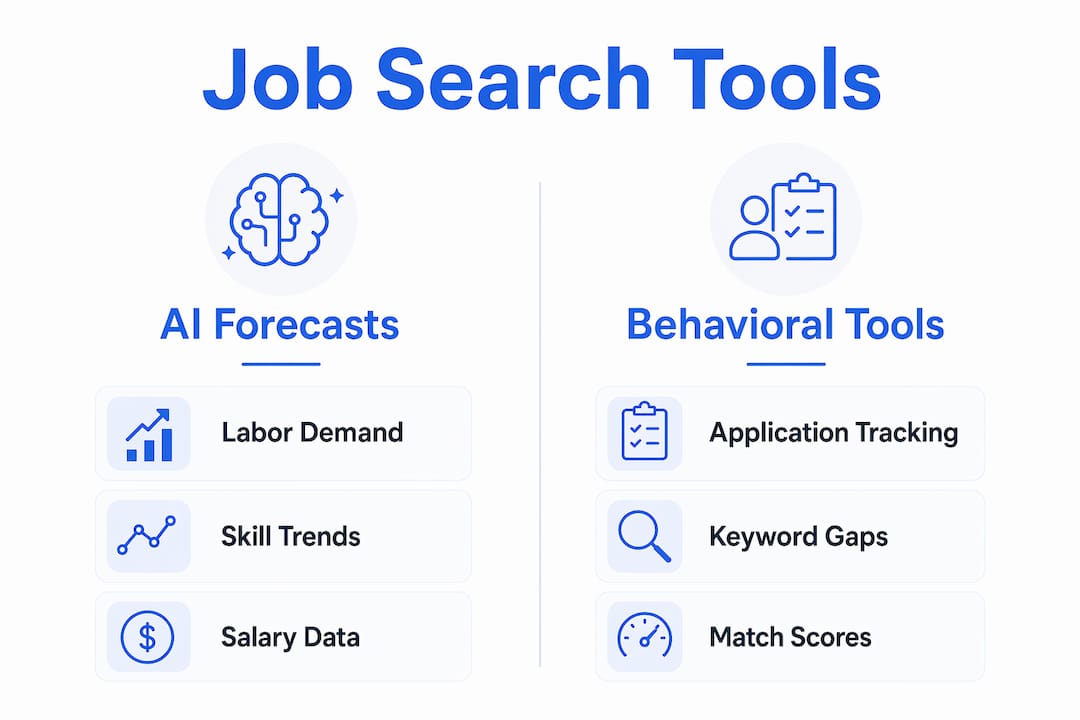
AI-driven job market forecasting is the most practical starting point. Experts recommend reviewing AI-driven labor market forecasts every 6–12 months, since modern models analyze millions of job postings and wage records to surface premium skills in specific local markets. That kind of data tells you not just what roles exist, but which skills are gaining value right now.

Experience Libraries are a second tool worth understanding. These systems track application outcomes so that AI can learn which resume variants and communication styles convert best for a specific individual. Every interview, rejection, and offer feeds back into the model, refining your targeting over time. This is not generic advice. It is personalized pattern recognition built from your own history.
Job platforms also use behavioral embedding systems. User search behavior gets condensed into what engineers call "behavioral embeddings," which allow platforms to understand your intent beyond the literal keywords you type. That means the platform is already reading your behavior. The question is whether you are reading it too.
| Tool type | What it tracks | Career insight it delivers |
|---|---|---|
| AI labor market forecasts | Job postings, wages, skill demand | Which skills are rising in your target market |
| Experience Libraries | Application outcomes per resume variant | Which resume style converts best for you |
| Behavioral embedding systems | Click, save, and search patterns | How platforms interpret your intent |
| Application dashboards | Match scores, volume, and timing | Whether your quality is holding up over time |
Earnhire's guided job search platform integrates several of these functions, tracking your search activity and turning it into measurable data that both you and prospective employers can use.
How to apply search behavior insights to refine your career strategy
Reading your patterns is step one. Acting on them is where the real shift happens. Here is a practical sequence for turning career insights from search behavior into a sharper job search strategy.
-
Run a keyword gap audit. Pull your last ten job descriptions and compare them to your current resume. List every term that appears in three or more descriptions but is absent from your resume. Those terms belong in your resume, your LinkedIn summary, and your cover letters.
-
Narrow your industry focus. If your applications span more than two or three closely related industries, pick the one where your experience is strongest and concentrate there for 30 days. Scatter dilutes your signal to recruiters and dilutes your own clarity.
-
Monitor your match scores over time. Application quality tends to drop as volume increases. Initial applications often score around 80% match, while later ones can fall to roughly 59%. If you see that drop in your own data, stop and recalibrate before sending more.
-
Schedule a labor market review every six months. AI-driven forecasts update as hiring shifts. A skill that was in demand in january may be table stakes by july. Build a calendar reminder and treat this review like a quarterly business check-in.
-
Use your rejection patterns to guide skill development. If you are consistently screened out at the resume stage for roles requiring a specific certification or tool, that is a clear signal. Enroll in a course, earn the credential, and update your resume before applying to that category again.
-
Align your activity level with your availability. Candidates with recent platform activity are 2.9x more likely to be hired. Consistent, visible activity is not just about applying. It is about signaling that you are present and ready.
Pro Tip: Use Earnhire's resume tools to run a keyword alignment check before each application. Even a five-minute review catches the gaps that cost you the interview.
Common mistakes when trying to convert search behavior into career insights
The biggest mistake is chasing volume. Sending 50 applications feels productive, but the data tells a different story. Application quality declines with volume as copy-paste fatigue sets in, and a 59% match score does not get you an interview. Quality beats quantity every time, and your own search data will confirm it if you look.
The second mistake is treating similar job functions as interchangeable. Career coach Juliana Katz makes this point clearly: function-shape matching matters far more than keyword matching. A Product Manager and a Product Marketing Manager share vocabulary but operate in fundamentally different ways. Applying to both because the titles look similar leads to poor placement and wasted effort.
Misreading passive signals is another common trap. Toggling "Open to Work" on a profile and then going quiet is not a search strategy. Recruiters and platform algorithms read recent, consistent activity as a signal of genuine readiness. Passive availability without active behavior does not move the needle.
Keyword stuffing a resume to match job descriptions is not the same as genuine alignment. When your resume mirrors the language of a role but your experience does not reflect the function, you may get the interview and lose the offer. Meaningful alignment means your skills, your language, and your target role all point in the same direction.
Finally, the most overlooked mistake is treating career insights as a one-time exercise. Your search behavior changes as the market changes. Professionals who review their job search patterns on a regular cadence catch drift early and adjust before it costs them months of misdirected effort.
Key Takeaways
Converting search behavior into career insights requires consistent pattern analysis, not just more applications.
| Point | Details |
|---|---|
| Qualification gaps are visible in your data | If 70% of your target roles require more experience than you have, your positioning needs work before you apply more. |
| Keyword gaps cost you interviews | Compare job descriptions to your resume regularly and close the language gap before each application. |
| Quality drops with volume | Match scores fall from roughly 80% to 59% as application fatigue sets in; monitor quality, not just count. |
| Behavioral activity signals hiring readiness | Consistent recent activity on platforms makes you 2.9x more likely to be hired than passive availability alone. |
| Insights require regular review | AI labor market data shifts every 6–12 months; schedule reviews to stay aligned with current demand. |
What I have learned from watching professionals search
I have spent a lot of time watching how professionals approach career transitions, and the pattern that stands out most is this: the people who struggle longest are usually the ones treating their search like a numbers game. They send more applications, refresh their inbox more often, and interpret silence as bad luck. The people who move faster are the ones who get curious about their own data.
The shift is not complicated, but it does require a change in mindset. Your search behavior is not just activity. It is feedback. Every mismatch, every rejection, every role you saved but never applied to is telling you something. The professionals I have seen navigate transitions most effectively are the ones who pause after ten or fifteen applications and ask, "What is this data actually showing me?"
Technology helps, but it does not replace judgment. AI tools can surface keyword gaps and forecast skill demand, but they cannot tell you which career direction feels right for you. That part still requires honest self-assessment. What the tools do is give you a cleaner picture of the gap between where you are and where you want to go.
My honest advice: treat your job search like a product you are iterating. Review the data, adjust the approach, and resist the urge to keep doing the same thing faster. The professionals who do this consistently do not just find jobs. They find the right ones.
— Eric
Earnhire turns your search activity into real career intelligence
Most job boards let your search effort disappear into the void. Earnhire is built differently. Every application, save, and resume tailoring session on Earnhire generates data that reflects your professional value, not just your activity count.
Earnhire's AI-powered tools analyze your search patterns, flag keyword gaps, and help you build a resume that speaks directly to the roles you are targeting. The platform also produces executive-level reports that show employers what your search behavior reveals about your readiness and expertise. If you are in a career transition and want your effort to count for something beyond just sending applications, Earnhire is where that work becomes visible and valuable.
FAQ
What does it mean to convert search behavior into career insights?
Converting search behavior into career insights means analyzing your job search patterns, including the roles you click, save, and apply to, to identify qualification gaps, keyword mismatches, and industry focus. This analysis turns raw search activity into a clear picture of your market positioning.
How do behavioral signals affect my chances of getting hired?
Candidates with recent, consistent job search activity are 2.9x more likely to be hired than those who rely on passive signals like "Open to Work" toggles. Active, visible behavior on job platforms signals genuine readiness to recruiters and platform algorithms alike.
How often should I review AI-driven job market data?
Experts recommend reviewing AI-driven labor market forecasts every 6–12 months. Hiring demand and skill premiums shift faster than most professionals expect, and regular reviews keep your targeting aligned with current market conditions.
Why does my application quality drop over time?
Application quality declines as volume increases because copy-paste fatigue sets in. Research shows match scores can fall from roughly 80% on early applications to about 59% on later ones. Monitoring your match scores and pausing to recalibrate prevents this quality drift.
What is the biggest mistake professionals make when analyzing their search behavior?
The most common mistake is focusing on volume instead of quality, and treating closely related job functions as interchangeable. Applying to both Product Manager and Product Marketing Manager roles because the titles look similar leads to poor placement. Function-shape matching, not keyword matching, produces better career outcomes.