
Job searching is unpaid labor. That is not a metaphor. The average job seeker submits 62.6 applications, each taking about 44 minutes, adding up to more than 46 hours of work before a single interview. That is more than a full workweek, with no paycheck attached. Why job searching feels like unpaid work is not a mystery once you see the numbers. It is a system that demands professional-grade effort, resume tailoring, interview prep, networking, and follow-up, while offering no guaranteed return. 67% of job seekers say the search feels exactly like a full-time unpaid job. If you feel that way too, you are not being dramatic. You are being accurate.
Why job searching feels like unpaid work: the real time cost
The job search workload is not just applications. Each submission is one piece of a much larger puzzle.
A typical week of active searching includes tailoring your resume for each role, writing a custom cover letter, researching the company, completing online assessments, attending phone screens, and following up. Stack those tasks together and you are looking at hours that rival a part-time job. The difference is that a part-time job pays you.

| Job search activity | Estimated weekly hours |
|---|---|
| Researching and applying to jobs | 8–12 hours |
| Resume and cover letter tailoring | 4–6 hours |
| Interview preparation | 3–5 hours |
| Networking and outreach | 2–4 hours |
| Follow-up and tracking | 1–2 hours |
| Total | 18–29 hours |
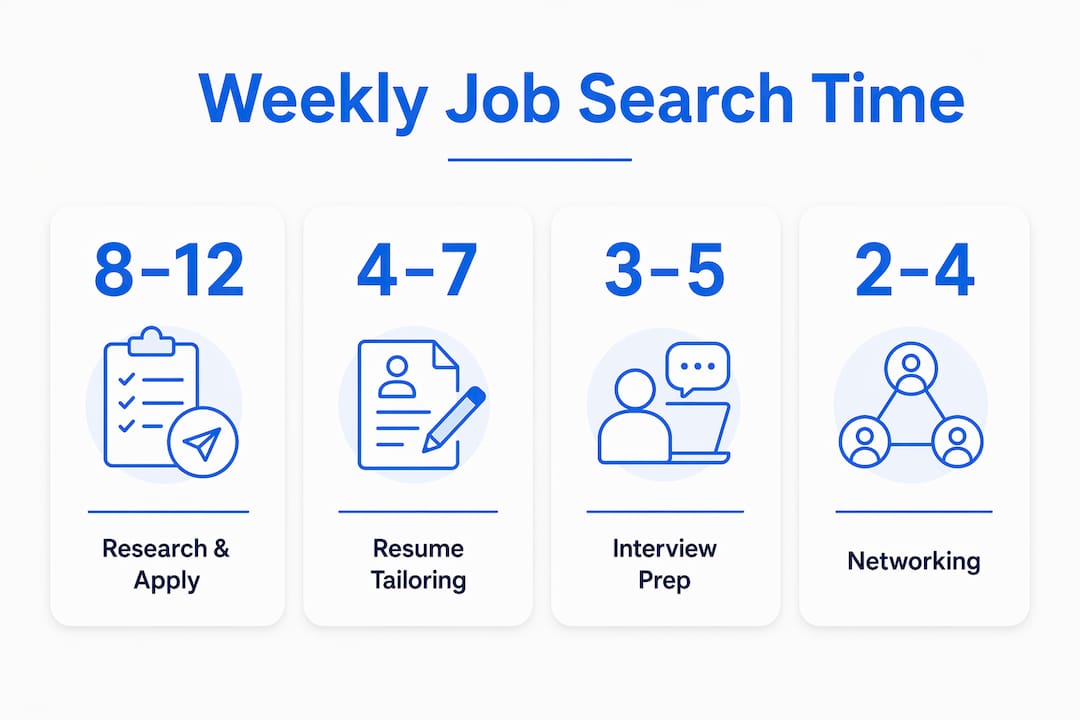
That range sits squarely in part-time to full-time territory. Yet none of it appears on a pay stub.
The emotional weight compounds the time cost. Nearly 80% of job seekers report feeling burned out from searching. For those who were laid off, that number climbs to 83%. Burnout at those levels is not a personal weakness. It is a predictable response to sustained, unrewarded effort.
Pro Tip: Set a firm daily limit on application time. Two focused hours beats six scattered ones. Protecting your energy is not laziness. It is strategy.
Why does job search effort go unrewarded so often?
The effort you put in rarely gets seen. That is the core problem, and it is structural, not personal.
Most applications pass through an applicant tracking system before any human reads them. AI screening tools filter candidates with non-linear career paths at higher rates, meaning a well-qualified person can be rejected before a recruiter ever opens the file. Your tailored resume, your careful keyword matching, your thoughtful cover letter. All of it can disappear into an algorithm.
Then comes ghosting. 94.3% of job seekers report being ghosted by at least one employer, and 67% of applications receive no response at all. That silence is not neutral. It actively erodes confidence and makes the effort feel pointless.
Career expert Vicki Salemi captures exactly why this hurts so much:
"Lack of feedback is more psychologically damaging than rejection. At least rejection gives you something to work with. Silence leaves you with nothing but uncertainty, and uncertainty is exhausting."
— Vicki Salemi, as cited by HR Dive
The emotional difficulty of managing rejection and uncertainty is a key reason job hunting drains people so deeply. It is not just the hours. It is the not knowing.
Here is what makes the feeling of invisible effort worse:
- No feedback loop. Most rejections arrive as a form email or not at all.
- No acknowledgment of quality. A generic rejection treats a tailored application the same as a one-click submission.
- No timeline. Hiring processes can stretch for weeks or months with no updates.
- No control. You cannot speed up a decision or force a response.
Ghosting reflects structural hiring problems, not your worth as a candidate. Knowing that does not make it painless. But it does make it less personal.
What systemic factors turn job searching into unpaid labor?
The hiring system in 2026 demands more from candidates than it ever has. That shift is deliberate, and it is driven by technology.
AI tools have made it cheap and easy to apply to dozens of jobs with minimal effort. Employers responded by raising the bar. 35.1% of job seekers were asked to complete unpaid assessments or projects for prospective employers. These are not quick personality quizzes. Some involve days of work, including writing samples, code challenges, case studies, and full project proposals, all before any offer is made.
The financial pressure adds another layer. 71% of job seekers lowered their salary expectations during their search, and 46% reported having less than three months of financial runway. That means many people are doing unpaid search labor while their savings run out.
| Traditional job search | Modern job search (2026) |
|---|---|
| Submit resume and cover letter | Tailor resume for ATS keywords |
| Wait for a callback | Complete multi-stage digital assessments |
| One or two interviews | Three to five interview rounds |
| Receive offer or rejection | Perform unpaid work trials |
| Negotiate salary | Accept lower offer or restart search |
The gap between what job searching used to require and what it requires now is significant. AI has increased the volume of low-effort applications, forcing employers to demand more from serious candidates. The burden of that shift lands entirely on job seekers.
Pro Tip: Before accepting any unpaid assessment, ask the recruiter about the timeline and next steps. If a company cannot give you a clear answer, that tells you something important about how they operate.
How to manage job search effort without burning out
The goal is not to work harder. It is to work in a way that protects your energy and produces better results.
-
Time-box your search. The "doomjobbing" cycle describes what happens when anxiety drives you to search compulsively, refreshing job boards for hours without real progress. Experts recommend strict daily time limits. Set a two-hour window for applications, then stop. Unlimited searching does not produce better results. It produces exhaustion.
-
Shift your effort toward direct outreach. Personalized messages to hiring managers on LinkedIn generate a 15–30% response rate, far higher than cold applications. That is not a small difference. Spending one hour on targeted outreach beats spending four hours submitting to job boards you never hear back from.
-
Track applications as assets, not tasks. Treating applications as assets to be tracked reduces the mental tax of searching and gives you a sense of control. Use a simple spreadsheet. Log the company, role, date, and status. Seeing your pipeline laid out makes the process feel less chaotic.
-
Celebrate small wins. Got a phone screen? That is a win. Finished a strong cover letter? That counts. The job search emotional toll is real, and small acknowledgments of progress help you stay motivated over a long search.
-
Set realistic expectations. The average search takes months, not weeks. Knowing that upfront prevents the crash that comes from expecting a fast result. Adjust your timeline and your self-talk accordingly.
Pro Tip: Use Earnhire's AI resume tailoring tools to cut the time you spend customizing applications. Less time on formatting means more time on networking, which is where most offers actually come from.
Key takeaways
Job searching is unpaid labor by definition: it demands professional effort, time, and emotional resilience with no guaranteed financial return until placement.
| Point | Details |
|---|---|
| The time cost is real | Job seekers spend 18–29 hours weekly on search tasks, rivaling a part-time job. |
| Ghosting is structural | 94.3% of job seekers are ghosted; silence is a system failure, not a personal verdict. |
| Unpaid assessments are rising | 35.1% of candidates are asked to complete unpaid work trials before any offer. |
| Direct outreach works better | Personalized LinkedIn messages yield a 15–30% response rate versus near-zero for cold applications. |
| Tracking builds control | Logging applications as assets reduces mental fatigue and helps you spot patterns faster. |
What I've learned watching job seekers carry invisible weight
I have spent a lot of time watching people go through this process. The ones who struggle most are not the least qualified. They are the ones who treat every application as a referendum on their worth.
Here is what I have come to believe: the job search is a broken feedback system, and most people internalize that brokenness as personal failure. They send 60 applications, hear back from three, and conclude something is wrong with them. Nothing is wrong with them. The system is just poorly designed.
The mindset shift that actually helps is moving from reactive to proactive. Stop refreshing job boards and start building relationships. Stop measuring success by application volume and start measuring it by conversations started. One real connection with a hiring manager is worth more than 20 cold submissions.
I also think the emotional drain of job hunting is underestimated by almost everyone who has not recently been through it. It is not just tiring. It is identity-threatening. Your professional value feels invisible when no one responds. That is why reframing the search as a project with measurable milestones matters so much. You need evidence that you are making progress, even when the system gives you none.
The job seekers I have seen come through this well are the ones who protect their time, focus their energy on high-return activities, and refuse to let silence define their confidence. That is not easy. But it is learnable.
— Eric
Your job search effort deserves to count for something
The hours you spend searching, tailoring, and preparing are real work. Earnhire is built on that premise.
Earnhire is the only job board that turns your search activity into measurable professional value. Every application you save, every resume you tailor, and every job you analyze builds your data worth, the kind of career signal employers actually use to make informed hiring decisions. With AI-powered resume tools and a guided job search that keeps your effort organized and visible, Earnhire helps you stop spinning your wheels and start building momentum. Your search should work for you, not just for the companies reviewing your file.
FAQ
Why does job searching feel like a full-time job?
Job searching requires 18–29 hours of weekly effort across applications, tailoring, prep, and networking. That workload matches or exceeds a part-time job, with no pay attached.
How common is ghosting during a job search?
94.3% of job seekers report being ghosted by at least one employer. It is the most common source of job search frustration and a leading driver of burnout.
What is "doomjobbing" and how does it affect job seekers?
Doomjobbing is the cycle of compulsive, anxiety-driven job searching that produces fatigue without results. Experts recommend strict daily time limits to break the cycle and protect mental health.
Are unpaid work trials legal and how common are they?
Unpaid assessments are widespread. 35.1% of job seekers were asked to complete them in early 2026. Legality varies by jurisdiction and task scope, so it is worth asking about compensation before starting any substantial project.
What actually works better than mass applying?
Direct outreach to hiring managers generates a 15–30% response rate, far above the near-zero return on cold applications. Targeted networking and referrals produce the majority of successful hires.