
Using job search as market research means treating every job posting, application outcome, and hiring signal as a data point that reveals real-time labor market trends and employer priorities. This practice, formally called labor market intelligence gathering, turns a frustrating process into a strategic advantage. The median job search now takes 108 days in Q1 2026, up from 57 days in 2023. That is a lot of time to waste if you are only submitting applications. Platforms like LinkedIn, Greenhouse, and Lever generate thousands of public signals daily. The question is whether you are reading them.
How to use job search as market research
Job postings are not just application portals. They are high-intent public signals of what companies actually need right now, broadcasting specific unmet priorities that social media noise never reveals. When a fintech company posts five data engineering roles in six weeks, that is not routine backfill. That is a product expansion or a platform migration in progress.

The professional term for this practice is labor market intelligence. The SEO phrase "use job search as market research" captures the same idea in plain language. Both describe the same discipline: reading the job market the way an analyst reads an earnings report.
Here is what you can extract from job ad analysis:
- Skill demand signals. Repeated skills across 20+ postings in your field confirm what employers are actually paying for, not what LinkedIn Learning is promoting.
- Emerging role titles. New titles like "AI Prompt Engineer" or "Revenue Operations Analyst" signal structural shifts in how companies organize work.
- Industry momentum. A surge in hiring across a sector, say climate tech or defense AI, indicates where capital is flowing before the press releases arrive.
- Salary range transparency. States like California and Colorado require pay disclosure. Those ranges give you real compensation benchmarks, not Glassdoor estimates.
Ghost jobs complicate this picture. About 30% of job postings are ghost jobs, postings without genuine intent to hire immediately. They exist for compliance, pipeline building, or internal approval processes. Recognizing them protects your time and your read on actual market demand.
| Signal Type | What It Reveals |
|---|---|
| Repeated skill requirements | Confirmed high-demand competencies in your field |
| Surge in role volume | Company expansion, new product line, or strategic pivot |
| Vague job descriptions | Likely ghost job or exploratory posting |
| Specific tech stack listed | Active project underway, not a future-state role |
| Multiple seniority levels posted | Team being built from scratch |
How do you collect and organize job market data?
Systematic collection separates intelligence from noise. You need a repeatable process, not a tab-heavy browser session you abandon by Thursday.
- Set up targeted alerts. Use LinkedIn Jobs, Greenhouse, and Lever to create alerts for 5–8 specific role titles across your target industries. Check them on a fixed schedule, three times per week at most. Frequency without discipline creates anxiety, not insight.
- Build a target company list. Map 25–40 specific companies with the role families and team focus you want. This prevents the drift toward mass applying that kills conversion rates.
- Track postings in a spreadsheet or job tracker. Tools like Huntr let you log postings, notes, and application status in one place. Record the date posted, required skills, salary range if listed, and whether the role reappears after 30 days (a ghost job signal).
- Compare historical vs. current postings. Screenshot or save postings before they disappear. Comparing a company's hiring patterns from Q4 2025 to Q1 2026 tells you whether they are growing, contracting, or shifting focus.
- Segment your data by industry, company size, and geography. A role that is abundant in Austin may be scarce in Chicago. Geographic segmentation reveals where your skills have the most leverage.
- Note application response patterns. Track which types of roles and companies respond. Response rates are themselves a market signal. Between 67% and 94% of applications receive no reply. If a specific company tier or role type consistently goes dark, that tells you something about their hiring process.
Pro Tip: Save the full text of job postings you find compelling. Postings get edited or removed, and the original language contains the clearest signal of what the hiring manager actually wrote before HR sanitized it.
You can also check the 2026 platform comparison checklist to evaluate which job boards give you the richest data for your specific field.
How do job search insights improve your career decisions?
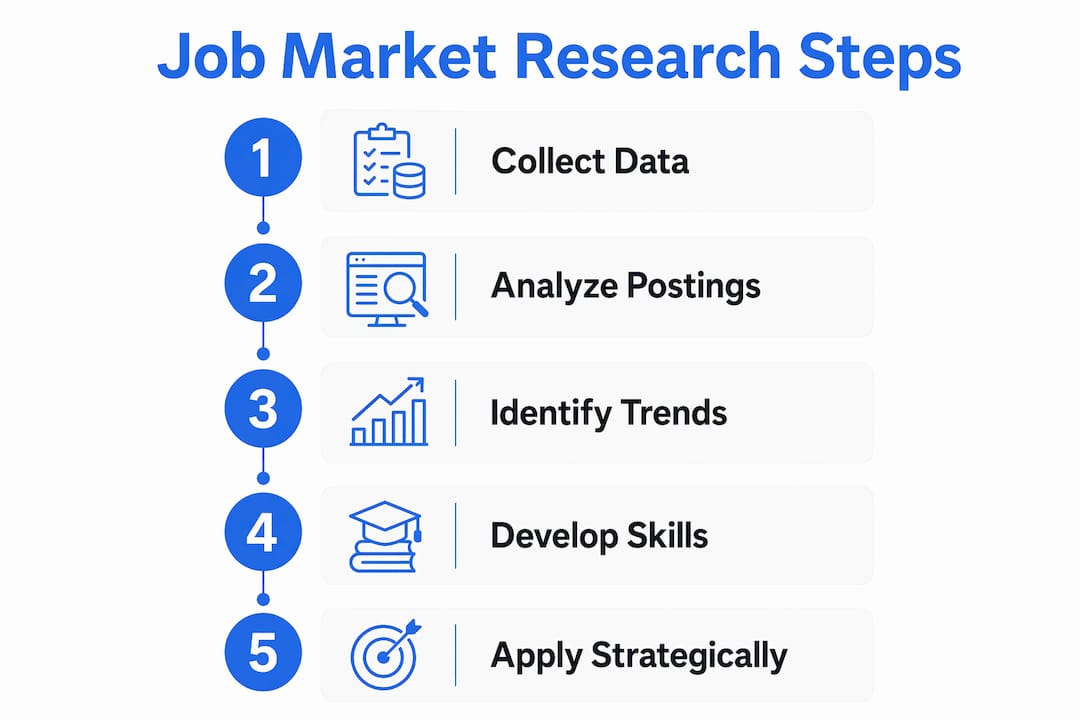
Raw data only helps if you act on it. Here is how to translate what you collect into concrete career moves.
Adjust your skill development plan. If you notice that 80% of senior marketing roles in your target sector now list "marketing mix modeling" as required, that is your cue to close that gap. Not because a career coach told you to, but because the market told you to. Platforms like Coursera, LinkedIn Learning, and Google Career Certificates all offer targeted upskilling paths you can align to what you are seeing in postings.
Target companies showing growth signals. A company posting across multiple departments simultaneously is usually in a growth phase. That is a better environment to join than one posting a single replacement role. Growth companies also tend to move faster in hiring, which matters when the average search runs 108 days.
- Optimize your LinkedIn profile for recruiter search. The skills section of your profile should mirror the language in your target postings, not a generic list you wrote three years ago. Recruiters search by exact terms. If postings say "demand forecasting" and your profile says "sales planning," you are invisible.
- Prioritize applications by data, not desperation. Applying to 11–20 tailored roles yields a 9.25% interview rate, compared to 2.58% for 100+ applications. Precision beats volume every time.
- Sequence your applications strategically. Apply to your top-tier targets after you have practiced your pitch on lower-stakes roles. Use early applications to test your resume and refine your positioning before you go after the roles you most want.
- Activate your network around your research. When you reach out to a contact at a target company, you now have something specific to say. "I noticed your team is hiring three data analysts and a VP of Analytics. I'd love to understand what's driving that growth." That is a conversation starter, not a cold ask.
Pro Tip: Use the career development resources from AccomplishMint to build a structured skill gap plan based on what your market research reveals. Pairing external data with a personal development roadmap is what separates reactive job seekers from strategic ones.
The hidden job market accounts for 60–75% of hires in knowledge roles above $80,000. That means your public posting analysis is only half the picture. Use it to identify target companies, then use your network to get inside those companies before a role is posted.
What are the biggest mistakes in reading job market data?
Misreading the signals is as costly as ignoring them. These are the traps that catch even experienced job seekers.
- Treating ghost jobs as real openings. Ghost postings often exist for compliance or pipeline building, not immediate hiring. Signs include vague descriptions, unrealistic pay ranges, and postings that reappear every 30 days unchanged. Deprioritize these and redirect your energy.
- Confusing volume with demand. A company posting 50 roles does not mean 50 people will be hired this quarter. Large enterprises post speculatively. Focus on companies where posting volume is new or accelerating, not companies that are always hiring at scale.
- Ignoring the hidden market. Effective 2026 job seekers spend about 50% of their time on warm network activation, which produces 70–80% of hires. If your entire strategy is public posting analysis, you are working the smaller half of the market.
- Equating application quantity with progress. Sending 100 applications feels productive. The data says otherwise. High-volume approaches drop interview conversion to 2.58%. More applications without better targeting just generates more silence.
- Sampling too narrow a window. Analyzing one week of postings gives you a snapshot, not a trend. You need at least four to six weeks of data to distinguish a genuine hiring surge from a one-off backfill.
The psychology of job search fatigue is real, and misreading data makes it worse. When you apply broadly and hear nothing, you assume the market is closed. Often, the market is fine. Your targeting is just off.
Key takeaways
Treating your job search as labor market intelligence gathering produces better applications, smarter skill investments, and faster offers than volume-based approaches.
| Point | Details |
|---|---|
| Job ads are market signals | Postings reveal company priorities, skill gaps, and strategic shifts before press releases do. |
| Ghost jobs waste your energy | About 30% of postings are not real openings; learn to spot and skip them. |
| Precision beats volume | Applying to 11–20 tailored roles yields a 9.25% interview rate vs. 2.58% for 100+ applications. |
| Hidden market dominates | 60–75% of knowledge-role hires above $80K come through referrals and internal channels, not public boards. |
| Track data systematically | Use tools like Huntr to log postings, response rates, and skill patterns over at least 4–6 weeks. |
What i've learned from treating job search like an analyst
I spent years watching job seekers do the same thing over and over: open a job board, search a title, apply to whatever looked right, and wait. No tracking. No pattern recognition. No signal reading. Just hope.
The shift I've seen work is treating the job search the way a good analyst treats a dataset. You do not just consume it. You interrogate it. Why is this company hiring three roles in this function right now? What does it mean that this title appeared 40 times last month and only 12 times this month? What does the language in this posting tell me about who actually wrote it?
What surprises most people is how much the public market tells you about the hidden one. When I see a company posting aggressively across a function, I do not just apply. I find someone inside that company on LinkedIn and start a conversation. The posting gave me the context. The network gives me the access. Combined, they work far better than either alone.
The other thing I'd push back on is the idea that more effort means more applications. The optimized job search workflows that actually produce offers in 2026 are disciplined and narrow. You pick your targets. You research them. You tailor everything. You activate your network around specific companies. That is the system. It is not glamorous, but it works.
The job market in 2026 is genuinely tough. A 4.3% unemployment rate with a vacancy-to-unemployment ratio below 1 means more candidates than open seats. In that environment, intelligence beats hustle every time.
— Eric
How Earnhire turns your job search into real market intelligence
Earnhire is built for exactly this kind of disciplined, data-driven job search. Every search you run, every posting you save, and every resume you tailor on the platform builds your professional data worth, giving employers real insight into your expertise while you stay competitive between roles.
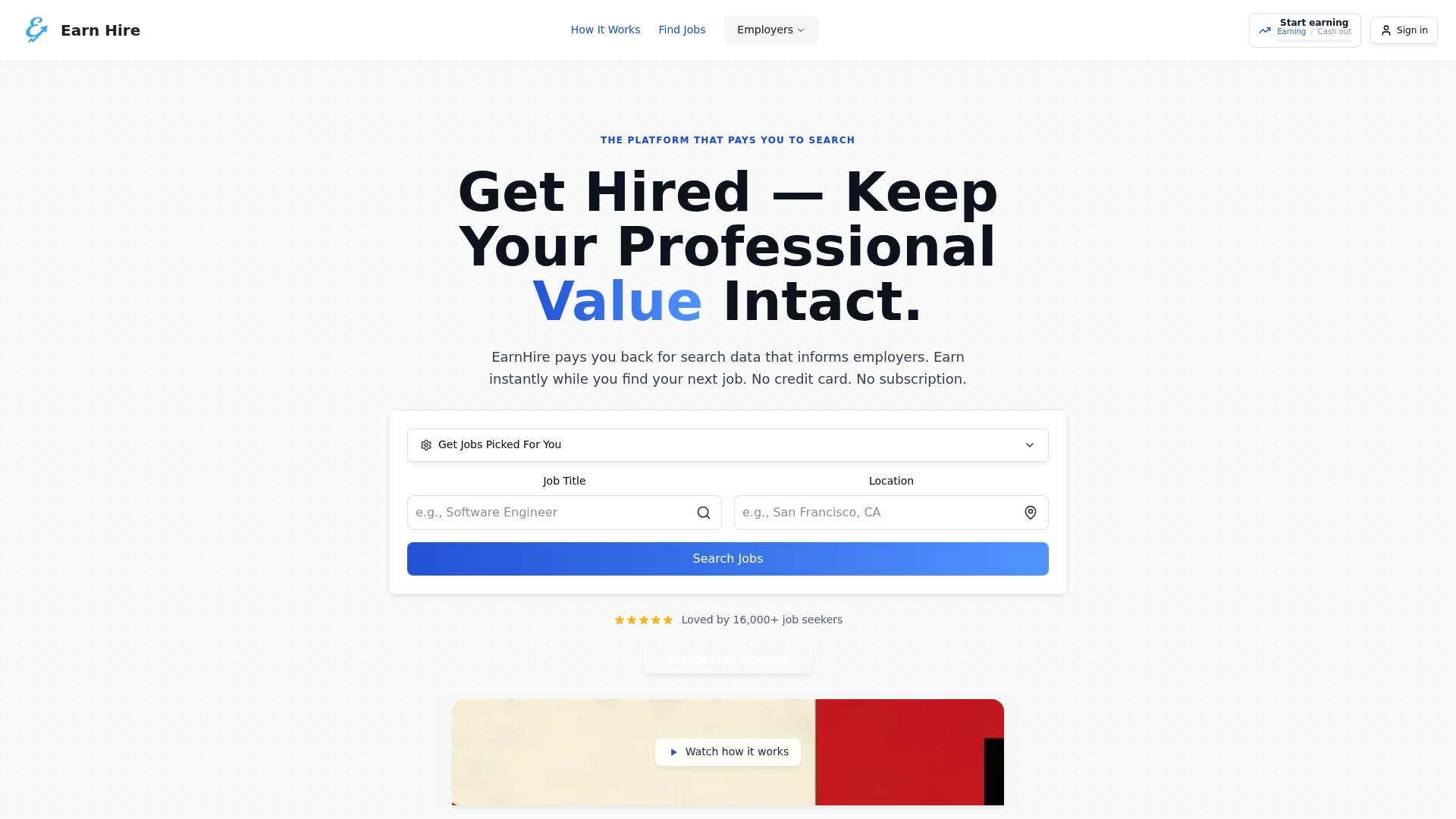
With Earnhire's job analysis tools, you can break down postings for skill signals, salary benchmarks, and hiring patterns in seconds. The resume tailoring tools align your profile to what the market is actually asking for, not what you think sounds good. And unlike traditional boards, Earnhire compensates you for the work of searching, so your effort always builds toward something. If you want a guided approach, the Earnhire guided search translates market signals into a clear, prioritized action plan.
FAQ
What does it mean to use job search as market research?
Using job search as market research means analyzing job postings, application response patterns, and hiring trends as data sources to understand labor market demand, skill gaps, and employer priorities rather than treating job boards as simple application portals.
How do i spot a ghost job posting?
Ghost jobs typically feature vague descriptions, unrealistic or missing pay ranges, and reappear unchanged every 30 days. About 30% of postings fall into this category, existing for compliance or pipeline purposes rather than immediate hiring.
How many jobs should i apply to for the best results?
Research shows that applying to 11–20 tailored roles produces a 9.25% interview rate, compared to just 2.58% for 100+ applications. Fewer, better-targeted applications consistently outperform high-volume approaches.
How do i analyze job listings for career development data?
Track postings over 4–6 weeks, note repeated skill requirements, compare role volume trends across companies, and flag new or accelerating titles. This pattern analysis reveals which skills to build and which companies are in active growth phases.
Why does the hidden job market matter for my job search strategy?
The hidden market, referrals and internal mobility, accounts for 60–75% of hires in knowledge roles above $80,000. Public posting analysis identifies target companies, but network activation is what gets you inside before a role is ever listed.