
Experienced workers are data-rich candidates because their career histories encode patterns, decisions, and outcomes that function as a structured dataset for hiring managers. The term "data-rich candidate" is not yet standard HR vocabulary, but the concept maps directly to what talent analysts call demonstrated performance evidence: quantifiable and qualitative signals embedded in a professional's work history. A 10-percentage-point increase in older worker representation links to 1.1% higher firm productivity. That number is small per hire but compounds fast across a team. The benefits of experienced workers go well beyond tenure length. Their resumes carry proof of judgment, adaptability, and results that newer candidates simply have not had time to generate.
Why experienced workers are data-rich candidates
Experienced professionals carry several distinct types of career data that recruiters can evaluate and score. These data types fall into two broad categories: quantitative records and qualitative signals.
Quantitative data includes measurable outcomes tied to specific roles:
- Revenue generated or costs reduced in prior positions
- Project completion rates and delivery timelines
- Team sizes managed and retention rates achieved
- Promotions and scope expansions over time
Qualitative data is subtler but equally powerful:
- Patterns of decision-making under pressure or ambiguity
- Mentoring relationships and knowledge transfer behaviors
- Cross-functional leadership and stakeholder management
- Career transitions that signal adaptability
Experienced professionals build what researchers call a "pattern library" over time. This is a mental catalog of risks, solutions, and strategic moves drawn from repeated exposure to real problems. No AI model can replicate it because it lives in context, not in code.
Non-linear career paths add another layer of value. A candidate who moved from operations to product management to consulting is not unfocused. That trajectory is a data asset signaling adaptive problem-solving capacity. Recruiters who read it as scattered miss the signal entirely.

Pro Tip: When reviewing a resume with multiple role changes, map each transition to a business challenge the candidate likely faced. You will often find a coherent thread of escalating complexity rather than instability.
AI-powered recruiting platforms surface this data by analyzing role progression, keyword density in achievement statements, and tenure patterns. Earnhire, for example, builds candidate profiles that capture job search data worth beyond a static resume, giving hiring managers a richer view of what a candidate has actually done.
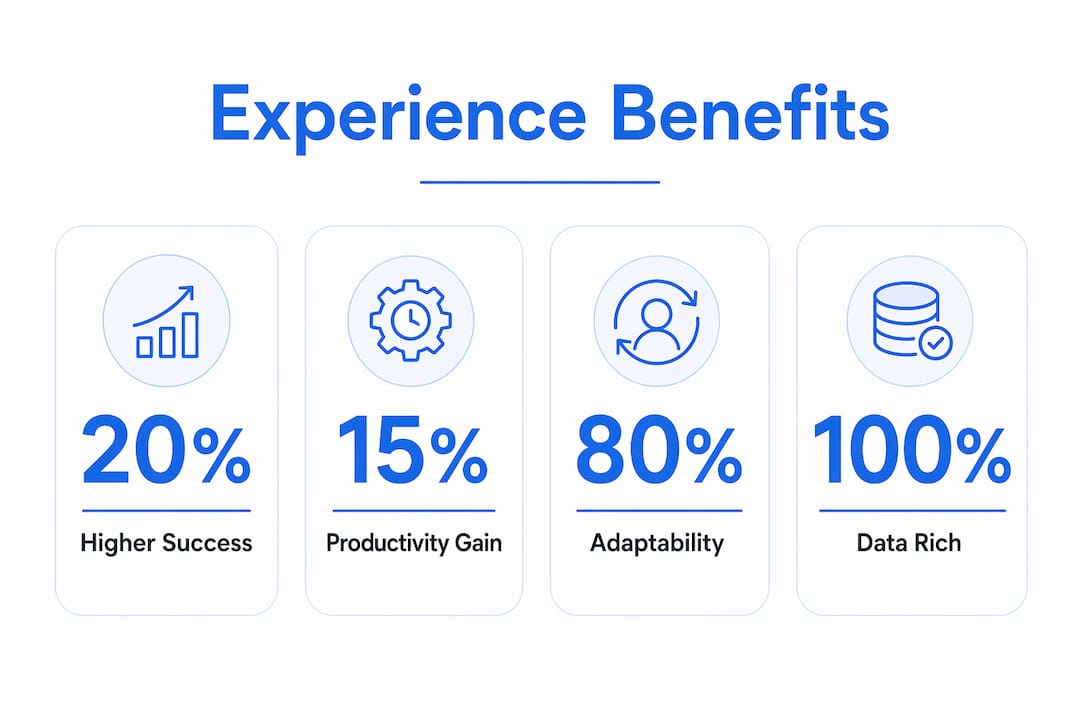
How does experience data translate to measurable productivity gains?
The productivity case for seasoned professionals is well documented. Research links experienced leadership directly to better organizational outcomes across multiple dimensions.
Experienced leadership contributes to a 15–20% higher success rate in complex project delivery. That gap matters most when projects involve ambiguity, competing stakeholders, or high stakes. Seasoned professionals have navigated those conditions before. They recognize the warning signs early and adjust before problems escalate.
The founder data makes the case even more sharply. A 50-year-old founder is nearly twice as likely to build a high-growth company compared to a 30-year-old founder. Experience does not slow people down. It sharpens their judgment about where to focus.
Knowledge transfer is the productivity multiplier that most hiring managers underestimate. Experienced employees who mentor junior colleagues produce gains that extend well beyond their own output. Research confirms that knowledge transfer from experienced staff significantly boosts junior productivity, with the effect amplified in remote and hybrid teams where informal learning is harder to come by.
"The most undervalued asset in any workforce is the experienced employee who makes the people around them better. Their data is not just in their resume. It lives in every conversation, decision, and correction they share with the team."
| Metric | Entry-level candidates | Experienced candidates |
|---|---|---|
| Complex project success rate | Baseline | 15–20% higher |
| Firm productivity per 10% workforce share | Baseline | +1.1% |
| High-growth company likelihood (founders) | Baseline | ~2x higher at age 50 |
| Junior staff productivity impact | Low | Significantly elevated via mentoring |
The pattern is consistent across industries and company sizes. Experienced candidates do not just perform better individually. They raise the floor for everyone around them.
Why does AI make experienced workers even more valuable?
AI commoditizes execution. It handles drafting, scheduling, data entry, and basic analysis faster than any human. That shift does not hurt experienced workers. It helps them. AI elevates strategic judgment by removing the low-value tasks that once buried it under busywork.
Here is what AI cannot replicate from an experienced professional's career history:
- The ability to read a room and know when a technically correct decision will fail politically
- Recognizing that a "new" problem is actually a version of one solved five years ago
- Knowing which stakeholders to involve before a project stalls, not after
- Understanding when data is telling you something wrong and why
These capabilities come from years of real-world exposure. They are the output of a career spent making decisions with incomplete information. AI tools can score a resume, but they cannot manufacture the judgment that fills a candidate's pattern library.
Recruiters who use data-driven hiring practices already see this shift. Evidence-based assessment replaces gut instinct with documented performance histories, and experienced professionals have the richest histories to draw from. The more complex the role, the more that history matters.
Pro Tip: When writing job descriptions for senior roles, include specific language about "navigating ambiguity" or "leading through organizational change." These phrases attract candidates whose resumes will contain the exact evidence you need to evaluate them.
The professionals who will be most valuable going forward are those who combine deep domain experience with AI literacy. Experience tells them what questions to ask. AI helps them answer those questions faster. That combination is genuinely rare and worth paying for.
What hiring strategies help recruiters identify data-rich experienced candidates?
Identifying experienced professionals as data-rich candidates requires a structured approach. Intuition-based screening misses the signals. Here is a practical framework:
-
Use competency-based scorecards. Define the specific data signals you want to see: scope of decisions made, complexity of problems solved, evidence of mentoring or knowledge transfer. Score candidates against these criteria, not just years of experience.
-
Audit your job descriptions for age bias. Phrases like "digital native" or "recent graduate preferred" filter out experienced candidates before they apply. Replace them with outcome-focused language that invites evidence of results.
-
Treat career transitions as data points, not red flags. A candidate who changed industries twice has demonstrated adaptability under pressure. Ask them to walk you through the decision. The answer will tell you more than the job title ever could.
-
Incorporate internal workforce data. Look at your highest-performing employees and map their career patterns. Use that profile to identify similar signals in external candidates. Job board data can supplement this analysis with broader market signals.
-
Ask for outcome narratives, not just responsibilities. The difference between "managed a team" and "reduced team turnover by 30% over 18 months" is the difference between a job description and a data point. Structure your interviews to pull out the latter.
Recruiters who master data literacy shift from order takers to strategic talent advisors. They use candidate historical data to assess fit with precision that gut instinct cannot match. That shift makes the recruiter more valuable, not just the candidate.
Key Takeaways
Experienced workers are data-rich candidates because their career histories contain documented patterns of judgment, adaptability, and results that directly predict future performance.
| Point | Details |
|---|---|
| Experience encodes performance data | Career histories carry quantitative outcomes and qualitative signals that recruiters can score and evaluate. |
| Productivity gains are measurable | Experienced leadership links to 15–20% higher project success rates and 1.1% firm productivity gains per 10% workforce share. |
| AI amplifies the value of experience | AI removes low-value tasks and elevates the strategic judgment that only real-world experience builds. |
| Pattern libraries are irreplaceable | Experienced professionals recognize risks and opportunities early because they have seen similar situations before. |
| Structured hiring captures the signal | Competency scorecards and outcome-focused interviews surface experience data that standard resume reviews miss. |
The credential obsession is costing you your best hires
I have watched hiring teams spend weeks debating whether a candidate's degree was from the right school while ignoring a 20-year track record of solving exactly the problems they needed solved. That is not a rare mistake. It is a systemic one.
The shift from credential metrics to holistic, data-enriched evaluation is not a trend. It is a correction. Recruiters who champion experience data become strategic partners to the business, not just filters in the hiring funnel. They bring evidence to the table. They argue for candidates with documented results instead of polished presentations.
The human element matters here too. A data-driven recruiting world still needs humans who can interpret what the data means. An experienced candidate's resume is not just a list of jobs. It is a record of how they think, adapt, and lead. Reading it well is a skill. Developing that skill is worth your time.
My honest view: the organizations that will win the talent competition in 2026 are the ones that stop treating experience as a liability and start treating it as the richest dataset in the room. The candidates who have been around long enough to fail, learn, and succeed again are carrying information that no amount of AI screening can generate from scratch.
— Eric
How Earnhire helps you find data-rich experienced candidates
Hiring managers who want to move beyond resume scanning need tools that surface the full picture of a candidate's career data.
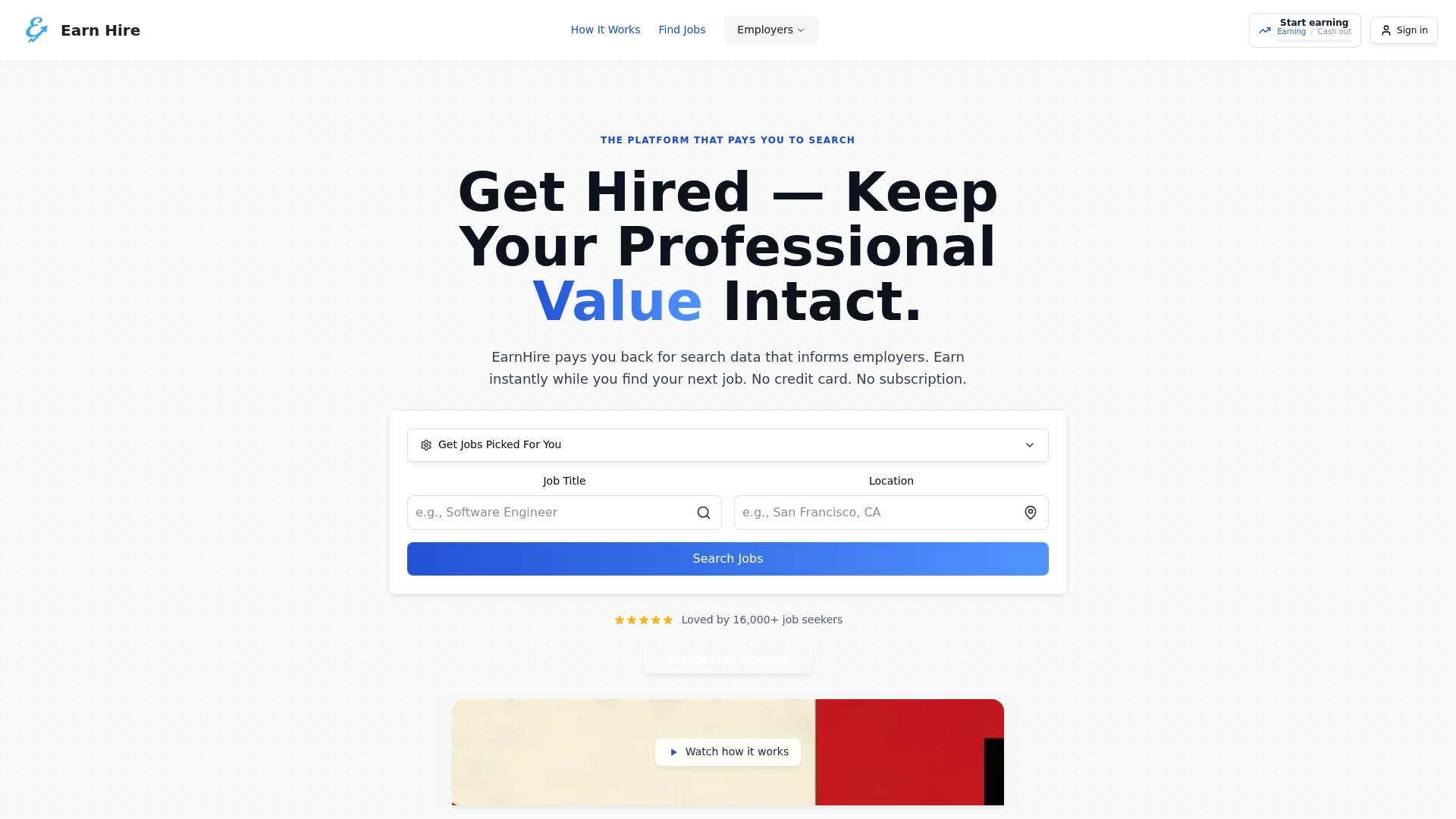
Earnhire is built for exactly that. The platform captures candidate data worth across every stage of the job search, giving recruiters access to structured signals from work history, resume tailoring activity, and job analysis behavior. You see how candidates engage with opportunities, not just what they list on a page. For experienced professionals, that behavioral data adds another layer to an already rich career record. Earnhire's resume tools also help seasoned candidates present their experience in the outcome-focused format that data-driven hiring teams actually need.
FAQ
What makes a candidate "data-rich" in hiring?
A data-rich candidate has a career history that contains documented outcomes, decision patterns, and performance signals recruiters can evaluate. Experienced professionals generate this data through years of roles, transitions, and results.
Why are experienced workers more valuable in AI-driven hiring?
AI handles execution tasks but cannot replicate the strategic judgment built through real-world experience. AI elevates the premium on experienced professionals by removing the work that once obscured their judgment.
How do non-linear career paths signal candidate value?
Non-linear transitions indicate adaptive problem-solving capacity. Research shows these varied career trajectories represent data-rich evidence of resilience and complex decision-making that standard resume reviews often overlook.
How does experience improve team productivity beyond individual output?
Experienced employees transfer knowledge to junior colleagues, raising team performance beyond their own contribution. This effect is especially strong in remote and hybrid teams where informal mentoring is harder to access.
How can recruiters avoid age bias when evaluating experienced candidates?
Focus on documented performance data rather than credentials or tenure length. Use competency scorecards, outcome-focused interview questions, and data-backed resume reviews to evaluate candidates on results, not assumptions.