
A smart job search strategy is a deliberate, multi-channel process that combines targeted networking, tailored applications, and proactive outreach to maximize your interview conversion rate. Most job seekers treat the search like a numbers game, sending out hundreds of generic applications and waiting. That approach fails. The data from 2026 shows that focused, specific tactics produce dramatically better results than volume alone. Whether you are just starting out or making a mid-career pivot, the difference between a three-month search and a six-month one often comes down to method, not luck.
What are the most effective job search strategies backed by 2026 data?
A smart job search strategy is, at its core, a sales process: generating leads, proving your competence, and negotiating offers. That framing matters because it shifts your mindset from passive applicant to active professional. You are not waiting to be chosen. You are building a pipeline.
The single highest-impact tactic is the referral. Referrals increase interview rates from roughly 3% to 40%, a 10x improvement over cold applications. That means one warm introduction is worth more than thirty generic submissions. Referrals represent only about 1% of total applications, yet they punch far above their weight in conversion.

Tailoring your resume is the second most impactful move. Candidates who customize their materials for specific roles achieve an interview rate of 5.8%, compared to 3.73% for untailored resumes. In practical terms, that is one interview per 17 applications with tailoring versus one per 33 without. Cutting your required applications in half is a significant efficiency gain.
Timing also matters more than most people realize. Applying within 24 hours of a job posting going live increases your visibility with recruiters and puts you at the top of the review queue. Using LinkedIn or job board filters to show only "Yesterday" or "Last 3 Days" postings is a simple habit that pays off consistently.
| Strategy | Interview conversion rate | Practical implication |
|---|---|---|
| Cold generic application | ~3% | 1 interview per 33 applications |
| Tailored resume application | ~5.8% | 1 interview per 17 applications |
| Referral from a contact | ~40% | 1 interview per 2.5 applications |
| Strong-tie network introduction | 30–50% | Highest yield per outreach effort |
Pro Tip: Set a daily LinkedIn filter for jobs posted in the last 24 hours in your target role. Apply the same morning. Recruiters often screen the first batch of applicants before the posting even gets widely shared.
How to build and sequence a targeted job search plan
The shift from high-volume generic applications to low-volume, high-specificity searching is the single most important mindset change you can make. Sending 200 applications to companies you know nothing about is not a strategy. It is noise.
Start by building a target company list of 25 to 50 organizations. For each one, note the specific team you want to join, the type of role you are targeting, and any contacts you already have there. This list becomes your working pipeline. You track progress, update statuses, and prioritize outreach based on warmth of connection and role fit.
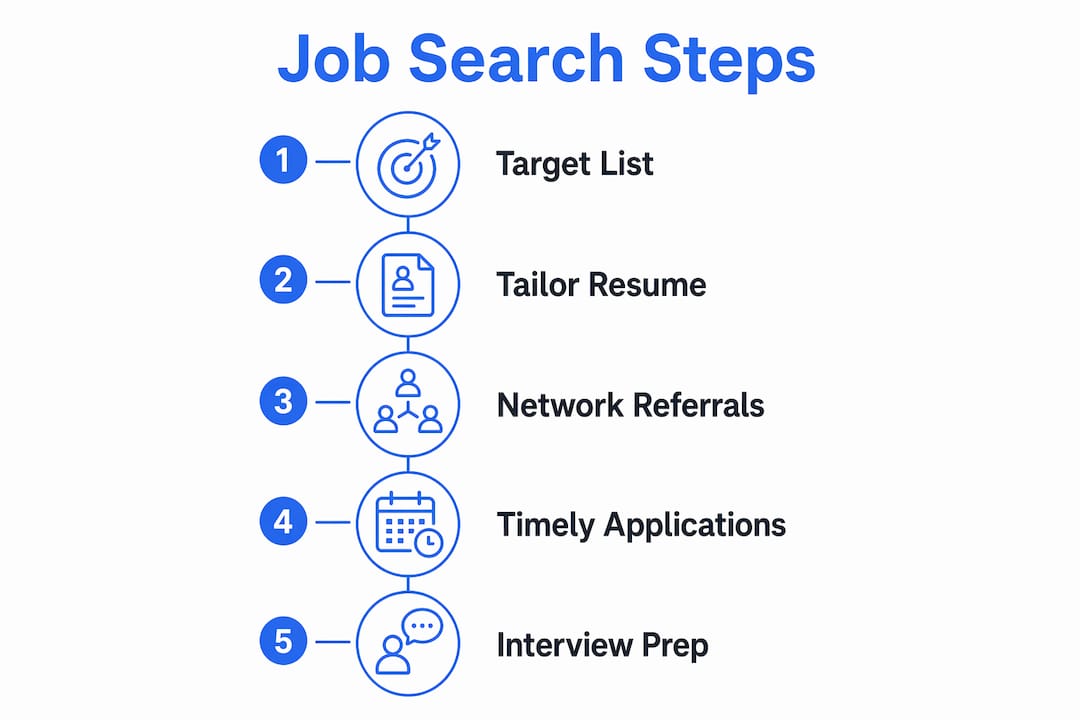
Once your list exists, optimize your LinkedIn profile before you do anything else. LinkedIn profile optimization with role-family keywords, measurable achievements, and a professional headshot directly improves inbound recruiter outreach. Think of your profile as a landing page. Every section should answer the question: "Why would a hiring manager want to talk to this person?"
Then sequence your outreach in this specific order:
- Internal mobility first. If you are currently employed, check whether your target role exists within your own organization. Internal candidates have a significant advantage in conversion rates.
- Strong ties second. Reach out to former managers, close colleagues, and trusted mentors who work at or know people at your target companies. Strong-tie introductions yield 30–50% interview conversion rates, making them your most valuable asset.
- Weak ties third. Former classmates, past coworkers you have not spoken to in years, and LinkedIn connections who work at target companies are all worth a short, specific message.
- Recruiters and hiring managers fourth. Direct outreach to a recruiter or hiring manager at a target company, with a personalized note referencing the specific role and your relevant experience, is far more effective than applying through the general portal.
- Public applications last. Apply through the job board only after you have exhausted warmer channels, or when no connection exists.
This sequencing is not about being manipulative. It is about recognizing that hiring is a human process, and humans respond to warm signals over cold ones.
Why customizing your application materials matters and how to do it efficiently
Tailoring your resume is not about rewriting your entire work history for every job. It is about adjusting three specific sections to mirror the language and priorities of the role you are targeting. Done right, it takes 15 minutes per application.
Here is the process:
- Read the job description carefully. Identify the top three to five skills or outcomes the employer is prioritizing. These are usually in the first paragraph of the posting or repeated multiple times.
- Rewrite your summary section. Your professional summary should speak directly to those priorities. If the role emphasizes cross-functional collaboration and data analysis, your summary should mention both, with a specific example.
- Adjust your skills section. Match your listed skills to the exact terminology in the posting. If they say "stakeholder management" and you wrote "client relations," swap it. Applicant tracking systems (ATS) scan for keyword matches.
- Tailor your top two or three accomplishments. Reorder or reframe your bullet points so the most relevant achievements appear first. Quantify everything you can: percentages, dollar amounts, team sizes, timelines.
- Fact-check everything. AI tools can reduce tailoring time to 15 minutes, but they occasionally generate phrasing that does not reflect your actual experience. Always verify that every claim in your resume is accurate before submitting.
Pro Tip: Keep a "master resume" with every role, achievement, and skill you have ever held. When tailoring, you pull from this document rather than starting from scratch. It saves time and keeps your facts straight.
The same logic applies to cover letters and LinkedIn. A cover letter that opens with a specific reference to the company's recent product launch or strategic direction signals genuine interest. Generic cover letters signal the opposite.
What are the best interview and negotiation practices for job seekers?
Converting an interview into an offer requires two things: a strong opening and a bidirectional mindset. Most candidates focus entirely on answering questions well. That is necessary but not sufficient.
The first 7 minutes of an interview have an outsized influence on hiring decisions. Prepare a 90-second personal pitch that covers who you are, what you have accomplished in measurable terms, and why this specific role at this specific company is the right next step. Practice it until it sounds natural, not rehearsed.
Beyond your opening, treat the interview as a two-way evaluation. Asking specific questions about role design, team culture, and success metrics signals that you think like a professional, not just a candidate. Questions like "What does success look like in the first 90 days?" or "How does this team handle disagreement?" give you real information and demonstrate strategic thinking.
For negotiation, the rules are clear:
- Wait for the offer in writing before discussing numbers. Verbal offers are not binding and can shift.
- Do not name a salary figure first. Let the employer anchor the conversation.
- Counter-offer with market data, not personal need. "Based on comparable roles in this market, I was expecting a range of X to Y" is far stronger than "I need more because of my expenses."
- Negotiate the full package. Base pay, equity, signing bonus, remote flexibility, and professional development budget are all negotiable in 2026 U.S. knowledge work.
The biggest mistake candidates make in negotiation is accepting the first offer out of relief or fear. A single counter-offer, delivered professionally, rarely costs you the job. It almost always improves the outcome.
Key takeaways
A smart job search strategy prioritizes referrals, tailored materials, and sequenced outreach over volume, cutting your time to offer significantly.
| Point | Details |
|---|---|
| Referrals are the top tactic | A referral increases interview conversion from 3% to 40%, making one warm contact worth 30 cold applications. |
| Tailoring cuts wasted effort | Tailored resumes produce an interview rate of 5.8% versus 3.73% untailored, nearly halving required applications. |
| Sequence your outreach | Start with internal mobility and strong ties before moving to recruiters and public job boards. |
| Apply early and specifically | Applying within 24 hours of posting and targeting 25 to 50 researched companies outperforms mass applications. |
| Negotiate with data, not emotion | Counter-offer using market benchmarks, and negotiate the full compensation package, not just base salary. |
What I have learned from watching job seekers get this wrong
I have seen smart, qualified people spend four months job searching the wrong way. They apply to 300 jobs, get five callbacks, and conclude the market is broken. The market is not broken. Their method is.
The candidates who move fastest treat the search like a professional project. They have a target list. They track their pipeline in a spreadsheet or a tool like Notion. They set weekly goals: five new outreach messages, two coffee chats, one application to a stretch role. Consistency beats intensity every time.
What I find most underrated is the emotional side of this. Rejection is built into the process. Even a 40% referral conversion rate means six out of ten referrals go nowhere. You have to build a system that keeps you moving regardless of how any individual outcome lands. That means separating your self-worth from your response rate.
The other thing I push back on is over-reliance on AI tools. They are genuinely useful for speeding up resume tailoring and drafting outreach messages. But I have seen candidates submit resumes with AI-generated accomplishments that they cannot speak to in an interview. That is a fast way to lose an offer. Use AI to accelerate your process, not to replace your judgment.
The job seekers who succeed in 2026 are not the ones with the most impressive backgrounds. They are the ones who show up with a plan, work it consistently, and treat every interaction as a signal worth sending.
— Eric
How Earnhire supports your job search from day one
Earnhire is built for job seekers who want their effort to count. Every search, save, and tailored resume you complete on the platform builds your professional data worth, giving employers real insight into your expertise and intent.
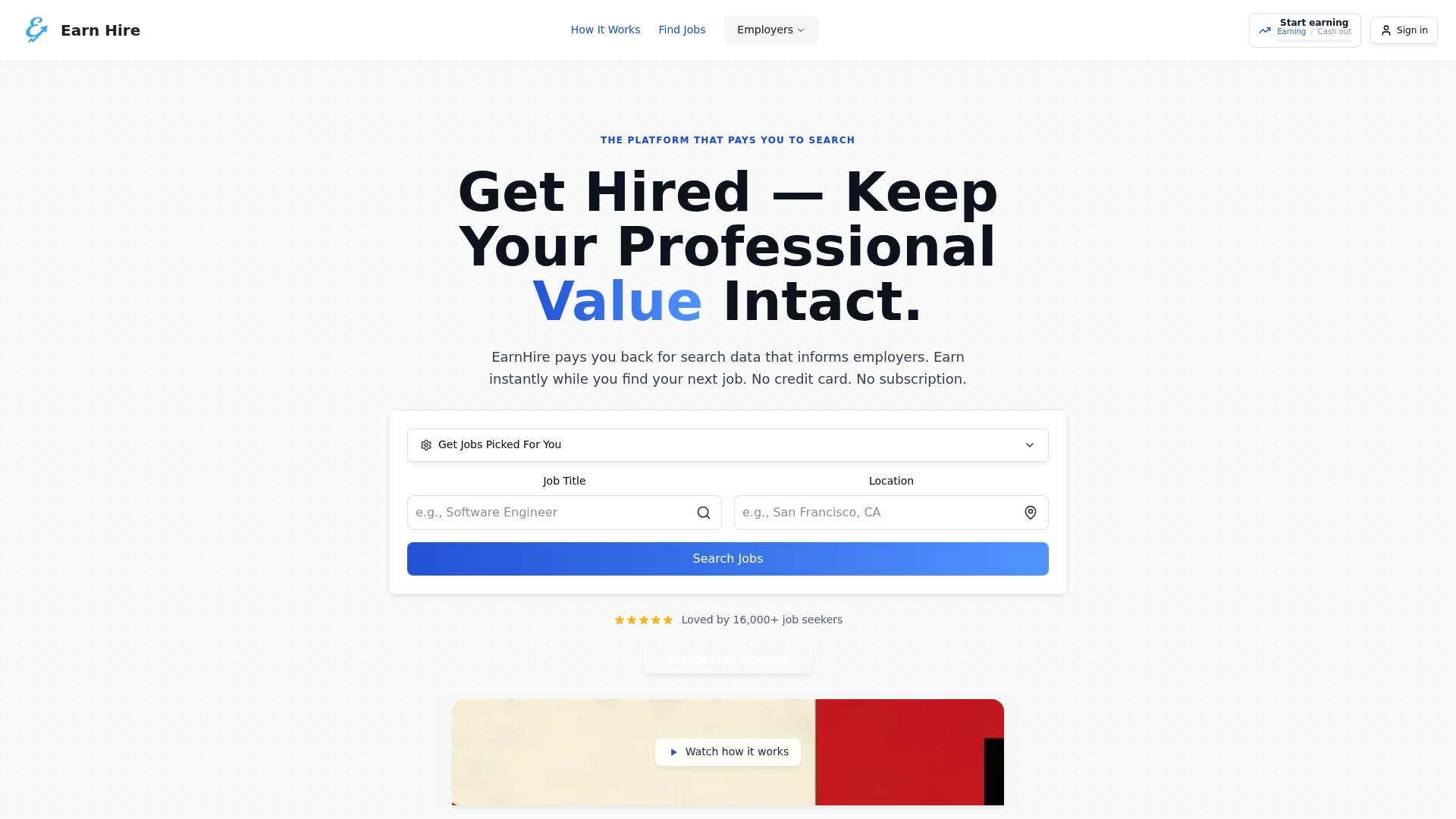
With Earnhire's AI resume tools, you can tailor your materials for each target role in minutes without sacrificing accuracy. The guided job search feature helps you build your target company list, sequence your outreach, and track your pipeline in one place. And unlike traditional job boards, Earnhire compensates you for the work of searching, so your time is never wasted. Start your informed job search today and turn every application into measurable career progress.
FAQ
What is a smart job search strategy?
A smart job search strategy is a focused, multi-channel approach that combines targeted networking, tailored resumes, and proactive outreach to maximize interview conversion rates. It prioritizes quality and specificity over volume, using data-backed tactics like referrals and early applications.
How many companies should I target in my job search?
Targeting 25 to 50 well-researched companies produces better results than mass applications to hundreds of generic postings. For each company, identify the specific team, role, and any contacts you can leverage for a warm introduction.
Does tailoring my resume actually make a difference?
Yes. Tailored resumes produce an interview rate of 5.8% compared to 3.73% for untailored ones, meaning you need roughly half as many applications to land the same number of interviews. Focus your tailoring on the summary, skills, and top accomplishments sections.
When should I bring up salary in a job interview?
Wait until you have a written offer before discussing specific numbers. Counter-offer using market data from sources like the Bureau of Labor Statistics or industry salary surveys, and negotiate the full package including equity, bonuses, and remote flexibility.
How do I use AI tools in my job search without making mistakes?
Use AI tools like ChatGPT or Claude to speed up resume tailoring and draft outreach messages, but always fact-check every claim against your actual experience. AI can generate plausible-sounding but inaccurate accomplishments, which will surface as a problem in interviews.